Coursera Plus Guide: Courses, Certificates, Savings
Coursera Plus explained: what the subscription covers, how certificates work, how to pick courses and ways to cut the cost of learning online.
Coursera Plus is a subscription that gives you access to a large part of the Coursera catalogue, including courses from universities and companies, guided projects and professional certificate programmes. If you plan to take more than one course in a year, a subscription can cost less than paying per course. This guide explains what it covers, how certificates work and how to avoid wasting money.
What is Coursera Plus?
Coursera is a learning platform that hosts courses made by universities and companies. Normally you can pay for a single course, a specialisation or a professional certificate. Coursera Plus bundles a big share of that catalogue into one subscription, so you can start, switch and finish many courses without buying each one separately.
Not every programme is included, and the list changes, so always check the course page: it shows whether your subscription covers it. For current prices and what is included, check the official pricing page.
What can you actually learn?
The catalogue is strongest in areas where employers ask for proof of skills:
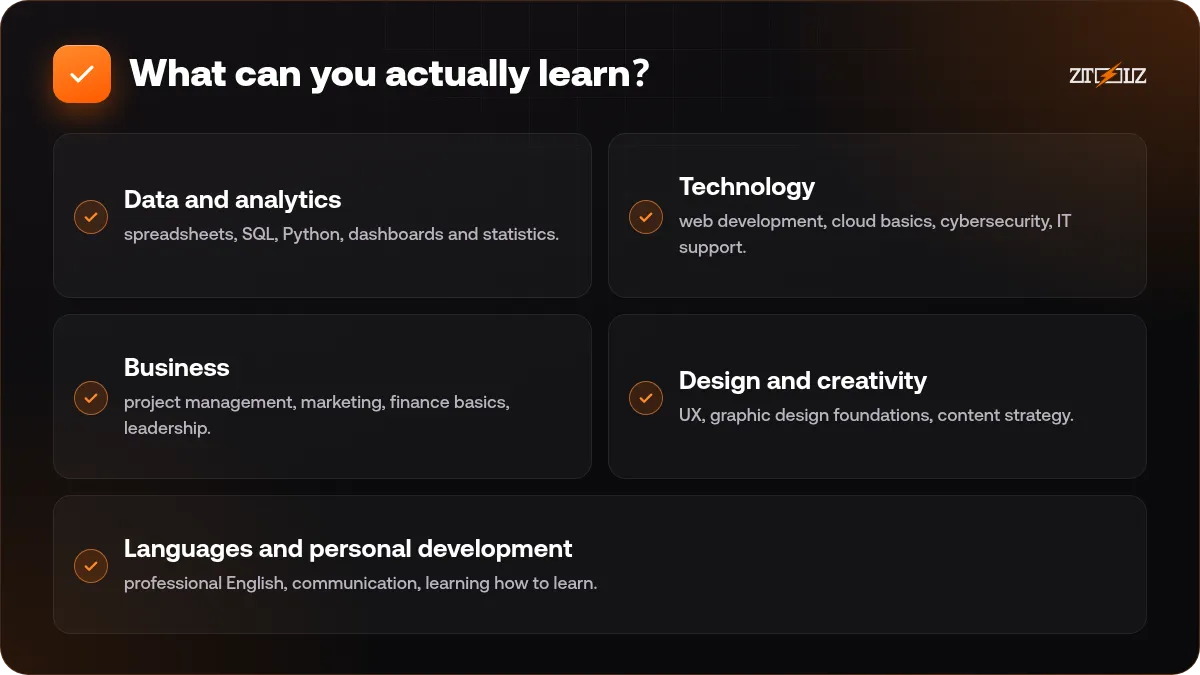
- Data and analytics: spreadsheets, SQL, Python, dashboards and statistics.
- Technology: web development, cloud basics, cybersecurity, IT support.
- Business: project management, marketing, finance basics, leadership.
- Design and creativity: UX, graphic design foundations, content strategy.
- Languages and personal development: professional English, communication, learning how to learn.
If you are comparing platforms, our article Udemy vs Coursera vs Skillshare shows where each one fits best.
How do Coursera certificates work?
When you complete a course, you can earn a certificate that you can add to your CV and LinkedIn profile. Some are tied to a university or a company, which gives them more recognition with employers. Professional certificate programmes are series of courses that end with a final project.
Be realistic about what a certificate means. It shows that you finished a course and passed its assessments. It does not replace a portfolio. Hiring managers usually care more about what you can show: a dashboard you built, a case study you wrote, a small app you shipped. Use the certificate as supporting evidence, not as the only proof.
After each course, spend one hour turning the final project into a portfolio item with a short explanation of the problem, your steps and the result. This is what makes the certificate useful.
How to choose the right course
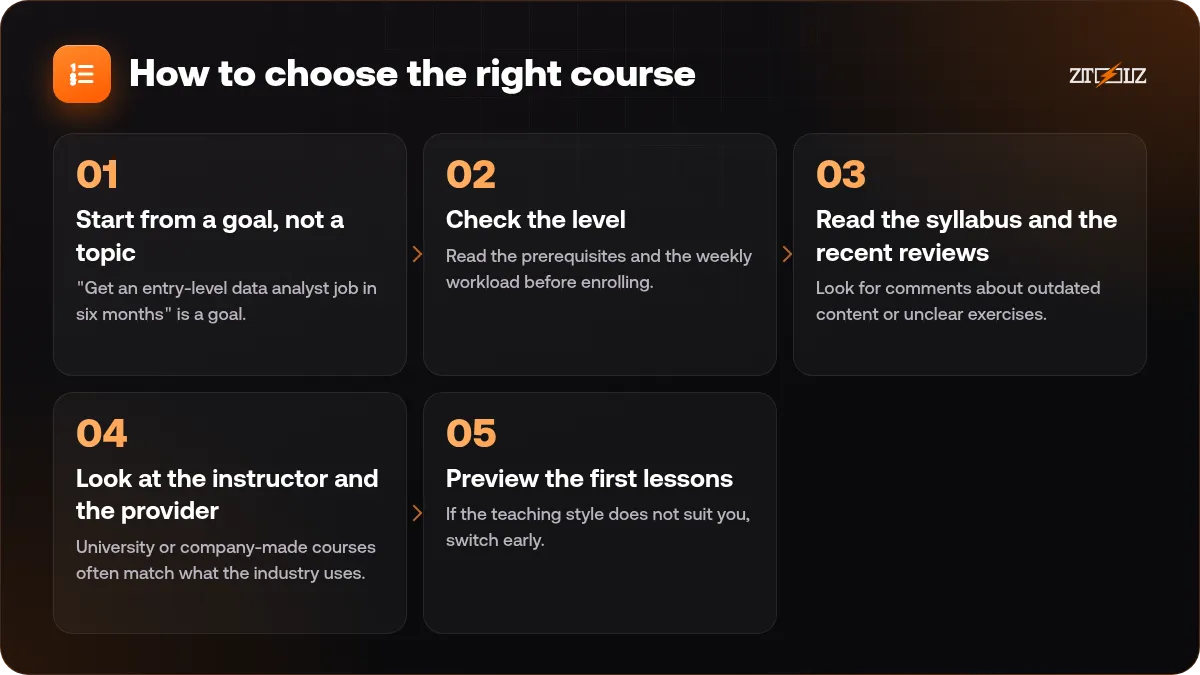
- Start from a goal, not a topic. "Get an entry-level data analyst job in six months" is a goal. "Learn data" is not.
- Check the level. Read the prerequisites and the weekly workload before enrolling.
- Read the syllabus and the recent reviews. Look for comments about outdated content or unclear exercises.
- Look at the instructor and the provider. University or company-made courses often match what the industry uses.
- Preview the first lessons. If the teaching style does not suit you, switch early.
Language matters too. If English is not your first language, turn on subtitles and the transcript. You will learn the vocabulary of your field at the same time, which is a bonus when you later apply for jobs. If you want to improve your English first, see learn English with Duolingo.
How to save money with Coursera Plus
A subscription is only cheaper if you use it. These habits make the difference:
- Plan a sprint. Choose two or three courses that fit together and finish them in consecutive weeks instead of letting the subscription sit idle.
- Set a weekly schedule. Three fixed sessions of 90 minutes beat one big weekend session that you postpone.
- Finish before you start a new course. Collecting half-finished courses is the most common way to waste a subscription.
- Compare against per-course prices. If you only need one short course, buying it alone may cost less.
- Share the cost where it makes sense. Shared access to a learning platform lowers the entry cost, and you only pay for the time you really study.
For more on the logic behind this choice, read shared vs individual tool subscriptions.
A 30-day study plan
Week 1: pick your goal and one core course. Complete the first module and set your weekly schedule.
Week 2: keep going and take notes in your own words. Do every quiz, even if it is optional.
Week 3: finish the course and start the final project. Ask a friend or an online community to review it.
Week 4: publish the project, add the certificate to your profile and start the next course in the same path.
Where do you study: laptop, phone or browser?
Consistency beats everything else, so pick the setup that you will really use. A laptop is best for coding exercises and graded projects, while a phone is perfect for short video lessons on the bus. If you use a shared cloud session through the Coursera cloud tool, remember that it opens in your browser, so keep your notes in a document of your own rather than inside the platform.
A simple routine that works for many learners: watch lessons in the morning when your mind is fresh, do exercises in the evening, and review your notes for ten minutes before sleeping. Small repeated sessions build memory far better than long, rare ones.
Common mistakes to avoid
- Watching videos without doing the exercises, then forgetting everything.
- Enrolling in ten courses at once.
- Choosing a course because it is popular, not because it matches your goal.
- Expecting the certificate alone to get you hired.
Coursera on ZTOOLZ: we offer shared access to Coursera Plus through accounts owned by the platform, opened in the browser through the cloud version or the ZTOOLZ extension. It is a shared platform account, so certificates and progress follow the rules of that account: check how it works before you rely on it for a certificate you plan to put on your CV. See the Coursera Plus tool page for our current price, or add it to a custom plan with the "+" button in the store. Payment methods available in your country appear at checkout.
FAQ
Is Coursera Plus worth it?
It is worth it if you will complete several courses within a year. If you only need one short course, paying for that course alone may be cheaper. Check the official pricing page for current numbers.
Will a Coursera certificate help me get a job?
It can support your application, especially if it comes from a recognised university or company. It works best together with a portfolio project and a clear CV.
Are all courses included in the subscription?
No. A large share is included, but some programmes are excluded or change over time. The course page tells you whether it is covered.
Can I learn in Arabic or with subtitles?
Many courses offer subtitles and transcripts in several languages, though the main language is often English. Check the language options on each course page before you enrol.
What is the difference between Coursera and Udemy?
Coursera focuses on structured programmes from universities and companies with graded assessments. Udemy has individual courses by independent teachers. Our comparison article explains which suits which learner.