Scribd Review: Ebooks, Audiobooks and Everand Explained
Scribd review and Everand explained: what you can read and listen to, how the two names relate, who benefits most and habits to read more in less time.
Scribd is a digital library known for ebooks, audiobooks, magazines and a huge collection of user-shared documents, and its reading subscription is now presented under the name Everand. This Scribd review explains how the two names relate, what you can actually read or listen to, who gets the most value, and how to build a reading habit that makes a subscription worth it.
Scribd and Everand: what is the difference?
The naming confuses many people. Scribd started as a place to share and read documents, then grew into a subscription reading service. Over time, the subscription side for ebooks, audiobooks and magazines was branded as Everand, while Scribd continues as a platform for documents and presentations. Which features sit under which name can change, so rely on what you see inside the service when you sign in.
In practice, think of it like this: Everand is for reading and listening to books and magazines, and Scribd is for documents and reference files shared by users and publishers.
What can you read and listen to?
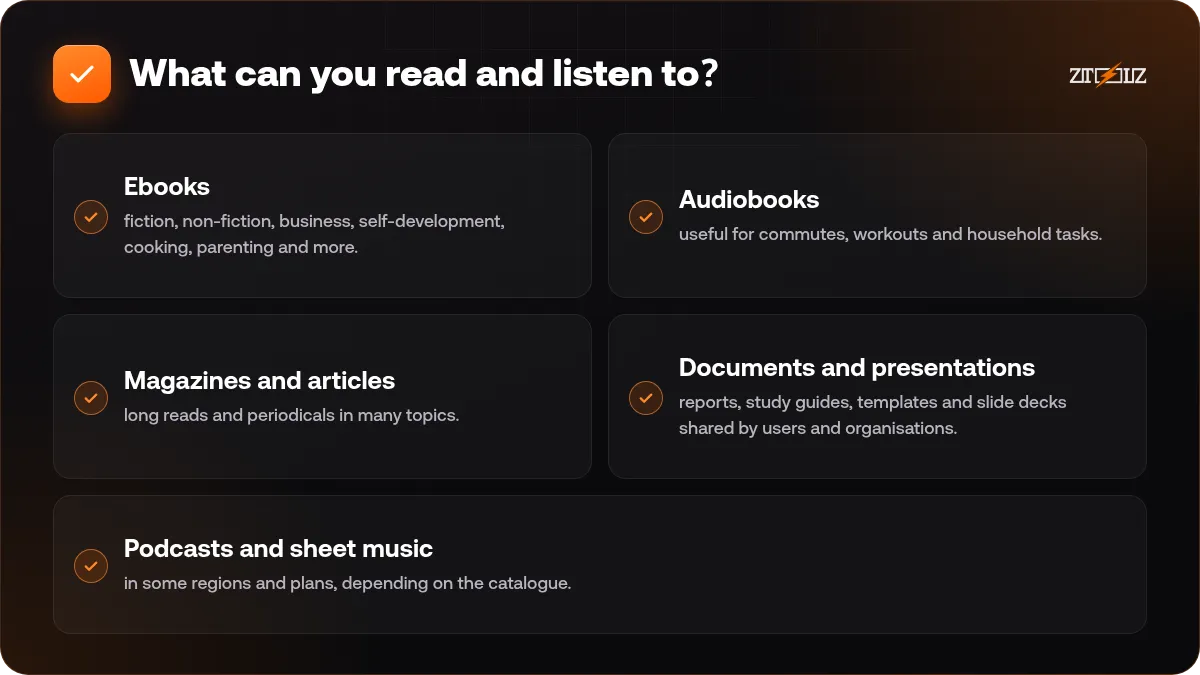
- Ebooks: fiction, non-fiction, business, self-development, cooking, parenting and more.
- Audiobooks: useful for commutes, workouts and household tasks.
- Magazines and articles: long reads and periodicals in many topics.
- Documents and presentations: reports, study guides, templates and slide decks shared by users and organisations.
- Podcasts and sheet music: in some regions and plans, depending on the catalogue.
The catalogue differs by country and changes over time. Some titles are in your plan, others may be limited. Check the title page for availability before you plan your reading around it.
Who gets the most from it?
Students and self-learners
Textbooks are not the focus, but you can find study guides, language materials and introductory books on many fields. Combine them with a structured course from a platform such as Coursera, and read the book version of the same topic for a second explanation. If you study with AI, see summarize lectures and study with AI.
Professionals and freelancers
Business, marketing, design and productivity books are easy to sample. Reading one chapter on a topic before a meeting or a pitch can give you language and frameworks you can apply the same week.
Commuters and busy parents
Audiobooks make small pockets of time useful. A twenty-minute commute can finish an entire book in a few weeks.
Casual readers
If you read one or two books a year, a subscription may not pay off. If you read a book a month or sample many, it can.
How to choose between ebook and audiobook
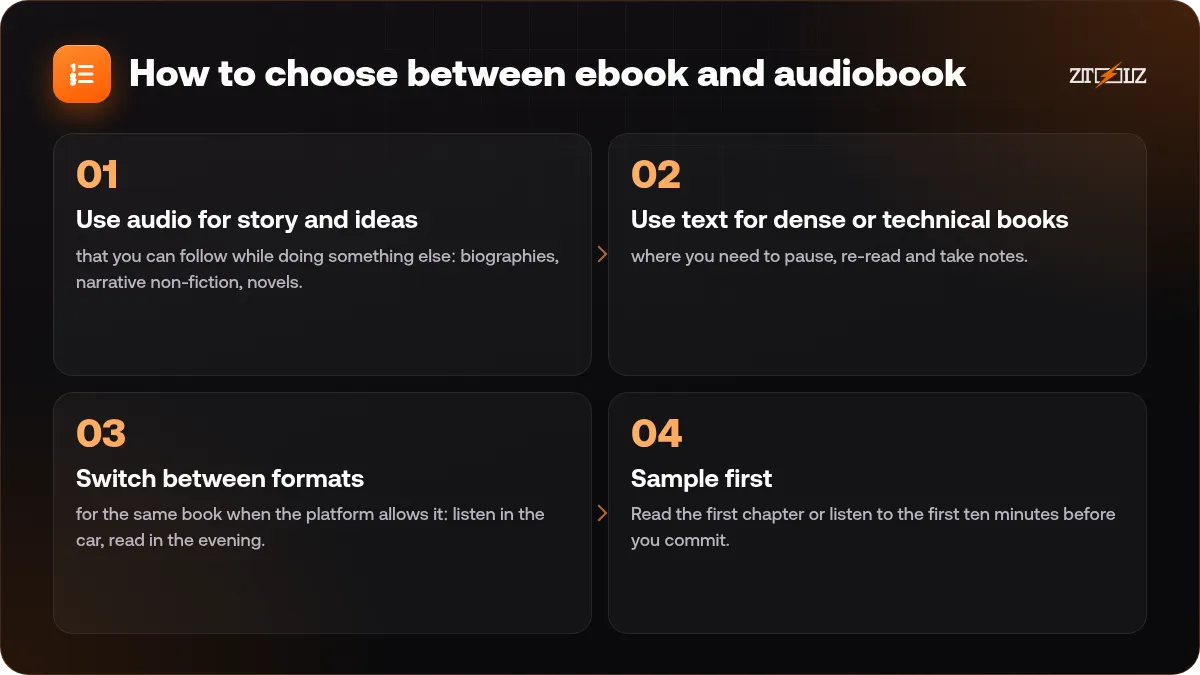
- Use audio for story and ideas that you can follow while doing something else: biographies, narrative non-fiction, novels.
- Use text for dense or technical books, where you need to pause, re-read and take notes.
- Switch between formats for the same book when the platform allows it: listen in the car, read in the evening.
- Sample first. Read the first chapter or listen to the first ten minutes before you commit.
Build a reading habit that pays off
A subscription does not make you read; a routine does. These small rules work for many people:
- Fix a daily slot, even fifteen minutes. Habit beats willpower.
- Keep a short list of three books: one you are reading, one next, one you want to try.
- Abandon books you do not enjoy after about fifty pages. Time is the real cost.
- After each chapter, write two sentences about what you learned in your own words.
- Choose one idea per book and apply it within seven days.
Make a monthly reading goal that you can measure, such as "two books and ten articles". Review it on the last day of the month and adjust.
Documents on Scribd: use them wisely
Because Scribd hosts documents shared by many people, quality varies. Check the author, the date and whether the content is original. Be careful with anything that looks like copied commercial material, and respect the rights of authors and publishers. For your own work, use documents as inspiration for structure and ideas, not as text to copy. If you write articles or reports, see SEO article writing with AI for ways to create original work.
Scribd or Everand vs other reading options
- Public library apps: free where available, but wait lists are common.
- Single-book purchases: you own the file, but it costs more per book if you read a lot.
- Course platforms: better for structured learning with exercises. Compare them in Udemy vs Coursera vs Skillshare.
- Subscription libraries: best for variety and sampling, which is the main strength of Everand.
A 30-day reading plan to test the subscription
Week 1: sample ten titles in different topics and keep only the three that hook you in the first chapter.
Week 2: read your first pick for fifteen minutes a day and listen to the audio version of your second pick on the way to work or while walking.
Week 3: write a one-page summary of what you learned and apply one idea in real life.
Week 4: count what you finished. If you completed at least two books and enjoyed the process, the subscription fits your life. If you finished nothing, the problem is the routine, not the catalogue, and you should fix that before paying again.
Habits for a shared account
If you use shared access, avoid changing profile details, do not add payment or personal information, and treat saved lists and bookmarks as temporary. Keep your own notes in a separate document or app so you never lose them. Our guide shared platform account security habits lists more tips.
Scribd and Everand on ZTOOLZ: we offer shared access to Scribd and an Everand cloud tool through accounts owned by the platform, opened in the browser through the ZTOOLZ extension or the cloud version. The catalogue you see depends on the account and may change. See the Scribd tool page and the Everand cloud page for our current price, or add them to a custom plan using the "+" button in the store. The payment methods available in your country appear at checkout.
FAQ
Is Scribd the same as Everand?
They are connected. Everand is the name used for the reading subscription with ebooks, audiobooks and magazines, while Scribd continues mainly as a platform for documents and presentations.
Is Scribd worth it?
It is worth it if you read or listen to several titles a month or like to sample widely. If you read very few books, buying single titles or using a library app may be cheaper.
Can I listen to audiobooks offline?
Offline listening is a common feature of reading apps, but availability depends on the plan and the title. Check inside the app before travelling.
Are there Arabic books?
The catalogue includes titles in several languages, but the amount of Arabic content varies by region. Search by language to see what is available.
Can I use Scribd documents in my own work?
Use them as reference and inspiration. Respect copyright, do not copy text, and always create original content for your own projects.