

Similarweb Competitor Analysis: A Practical Guide
Similarweb competitor analysis step by step: read traffic sources, keywords and referrals, find gaps, and turn the findings into a short action list.

Similarweb competitor analysis means using traffic estimates to see where a rival's visitors come from, which keywords and pages bring them in, and which sites send them referrals. You then use that picture to find gaps in your own marketing. Treat the numbers as estimates that show direction, not as exact figures.
What can Similarweb tell you about a competitor?
Similarweb estimates traffic for websites and apps by combining several data sources and modelling. That means accuracy is better for large sites and weaker for small ones. For a new store with few visitors, the numbers may be thin or missing, so use it mostly on established competitors.
The reports most useful to store owners and marketers are these:
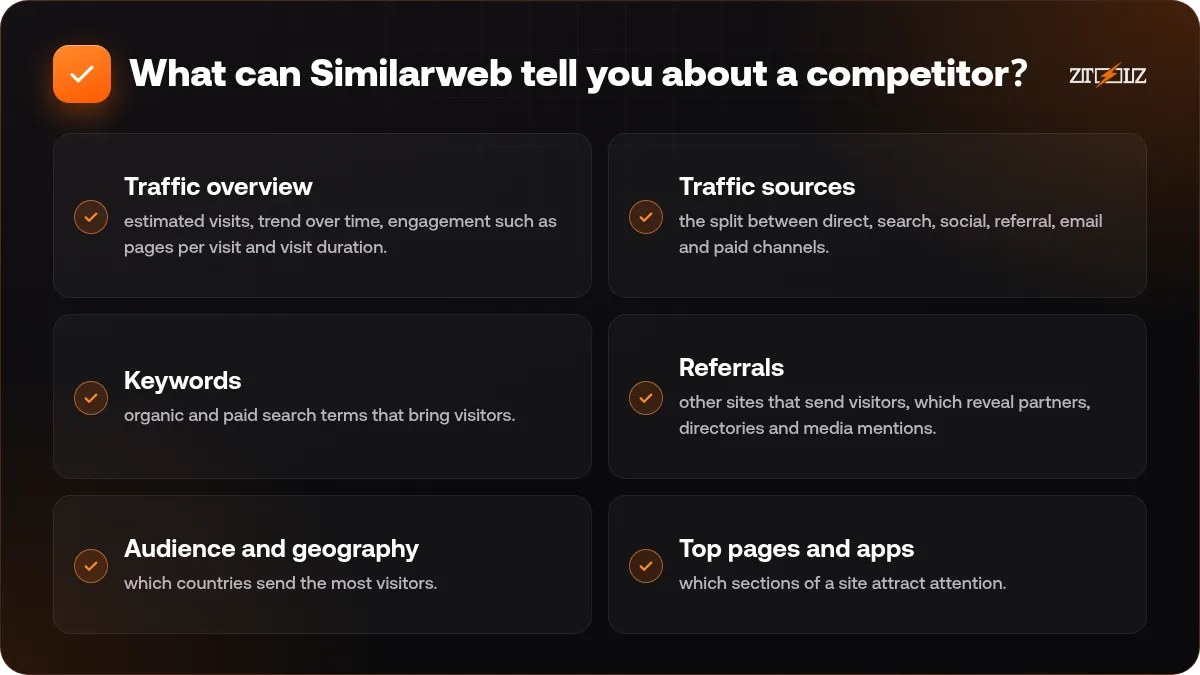
- Traffic overview: estimated visits, trend over time, engagement such as pages per visit and visit duration.
- Traffic sources: the split between direct, search, social, referral, email and paid channels.
- Keywords: organic and paid search terms that bring visitors.
- Referrals: other sites that send visitors, which reveal partners, directories and media mentions.
- Audience and geography: which countries send the most visitors.
- Top pages and apps: which sections of a site attract attention.
How do you run a competitor analysis step by step?
Follow the same order every time so your findings are comparable across competitors.
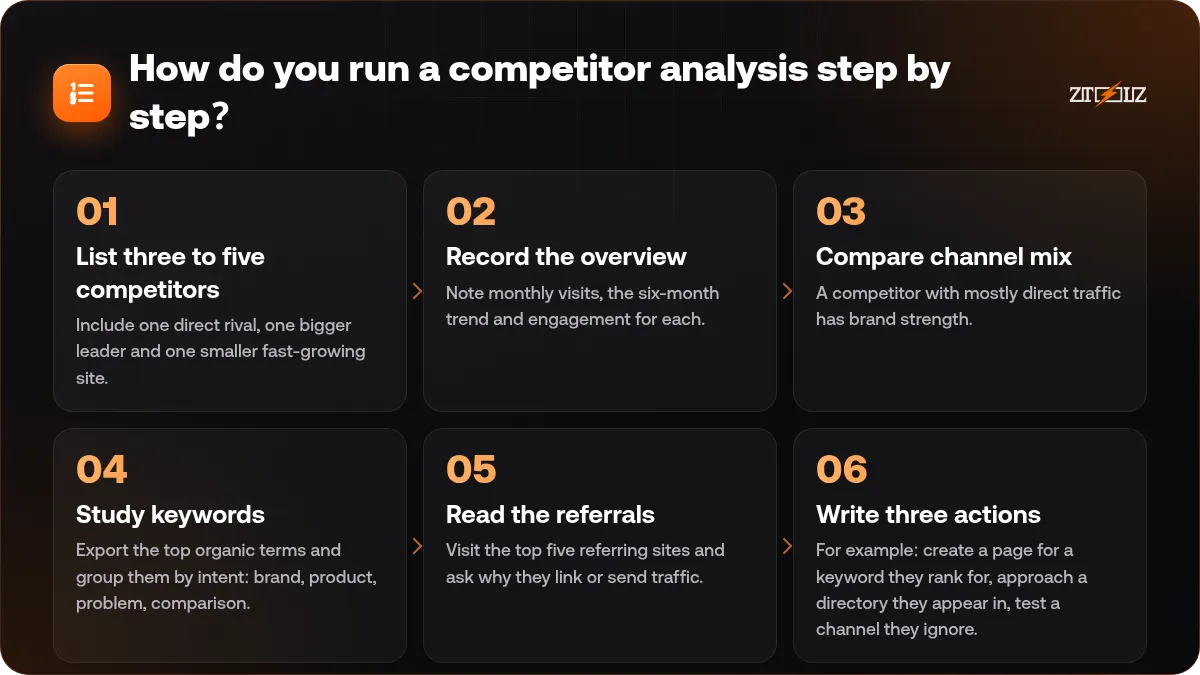
- List three to five competitors. Include one direct rival, one bigger leader and one smaller fast-growing site.
- Record the overview. Note monthly visits, the six-month trend and engagement for each. A rising line says more than a single number.
- Compare channel mix. A competitor with mostly direct traffic has brand strength. One with mostly paid traffic depends on ads and may be vulnerable.
- Study keywords. Export the top organic terms and group them by intent: brand, product, problem, comparison.
- Read the referrals. Visit the top five referring sites and ask why they link or send traffic.
- Write three actions. For example: create a page for a keyword they rank for, approach a directory they appear in, test a channel they ignore.
Keep a simple spreadsheet with one row per competitor and the same columns each month. Comparing month to month turns one-off curiosity into a habit.
How do you read traffic sources correctly?
Channel percentages tell a story only when you ask what they mean. High search share suggests content and SEO strength. High social share suggests a creator-led or community-led audience. High referral share often means affiliates, press or marketplace listings. High direct share can mean loyal customers, but also that the tool cannot attribute some visits.
Use the story to choose a test. If every competitor wins on search and you have no content, start with a few articles built around real questions. Our guide to SEO article writing with AI helps with that step.
How do you find keyword and content gaps?
A keyword gap is a term where competitors earn traffic and you do not. Here is a practical way to turn Similarweb data into a content plan.
- Collect the top organic keywords for two competitors.
- Remove their brand names and anything you do not sell.
- Mark the terms you already cover and the ones you do not.
- Check the difficulty and search volume of the gaps in a dedicated keyword tool such as Mangools, which is built for that job.
- Pick five gaps with realistic difficulty and write one useful page for each.
Similarweb is strong for seeing the competitive landscape. A keyword tool is stronger for choosing individual phrases. Using both gives you direction and detail. Read our Mangools keyword research guide for the second half of the process.
What can you learn from referral sites?
Referrals are the most overlooked report. If a competitor receives steady visits from a review site, a comparison directory, a forum or a media outlet, you have found a place where their audience gathers. You can ask to be listed, submit a product for review, or answer questions there honestly.
Do not spam. Offer something useful, such as accurate information or a genuine product for testing. Relationships built this way last longer than a one-off link.
A worked example for a small online store
Imagine you sell phone accessories in Pakistan. You pick three rivals and notice that the largest gets most of its visits from search, while the fast-growing one gets a large share from social platforms and short videos. Your own traffic is mostly direct, because customers already know you.
The reading is clear. You have a loyal base but little discovery. Two tests follow: publish buying guides for the search terms the leader owns, and try short product videos like the growing rival. After two months, compare your search and social shares again. Small, measurable tests like this are what make the analysis worth the time.
Common mistakes with competitor analysis
- Treating estimates as facts. Use ranges and trends, and never quote a competitor's exact revenue from traffic alone.
- Copying instead of differentiating. The goal is to find a gap, not to build a clone.
- Ignoring the country. A competitor strong in the US may be irrelevant in Egypt or the Gulf. Filter by your target country.
- Analysing once. Markets move. Review monthly or quarterly.
- Never acting. Every analysis should end with a short list of changes and an owner and date for each.
Questions to ask in every review
- What channel grew fastest for them in the last three months?
- Which page or section gets the most attention, and why?
- Where does their traffic come from that ours does not?
- What is one thing they do poorly that we can do clearly better?
ZTOOLZ offers Similarweb Pro access through shared, platform-owned accounts, opened with the ZTOOLZ extension or secure browser, so you can run competitor reviews without a separate full subscription. See the Similarweb Pro page for our current price. For keyword work, add Mangools to a custom plan with the + button in the store, or look at All In One if you use many tools. Because the account is shared, avoid changing settings or saving personal data in it.
FAQ
How accurate is Similarweb?
It gives modelled estimates. Large sites are generally more reliable than small ones, so use the numbers to compare trends and channel mix rather than to quote exact visits.
Can I analyse any website?
You can look up most sites, but very small or new sites may show limited or no data.
Is Similarweb a keyword research tool?
It shows keywords competitors rank for, which is useful for ideas. For difficulty scores and detailed search volume, a dedicated tool such as Mangools is a better fit.
How often should I review competitors?
Monthly for fast-moving markets and quarterly for slower ones. Keep the same metrics each time so changes are easy to see.
Does this work for apps and stores in Arabic markets?
Yes, you can filter by country and compare websites or apps in your region. Data quality varies by market, so combine it with your own analytics.